Service is an Enterprise Capability, Not a Department
Organisations don't have customer experience problems. They have enterprise service problems, and customers experience the symptoms. CXTT gives senior leaders an independent read on what's broken, why, and what will fix it. No platforms to sell. No implementation revenue to protect.
Customers experience your operating model, not your org chart.
Transfers, repeat contacts, long waits, poor AI, rising cost to serve. These are not isolated faults. They are symptoms of how the enterprise is designed to carry a customer problem from where it surfaces to where it can be solved. Fix the model, not the symptom. Adding tools to a broken model scales the break.
Vendor-Agnostic
No platforms to sell, no implementation revenue at stake. The advice is independent because the business model is independent.
Enterprise Depth
More than two decades across service operations, contact centres and technology leadership. Five years as CIO. Senior government and Defence roles.
Executive Audience
Built for boards, executive teams, and senior leaders who need clearer line of sight before committing further capital.
The Buying Trigger
Independent advice reduces the cost of bad decisions. No vendor relationships means no conflict of interest, just a clear read of what is driving the problem and what it will take to fix it.
The common factor is doubt.
Organisations reach us at different points, before a major commitment, when something has stalled mid-delivery, or when a vendor recommendation needs an independent read. The timing varies. The trigger is the same: someone in the room is not confident the current path is the right one.
Outcomes not following investmentInvestment has been made but outcomes have not followed. Leadership needs to understand what is actually driving performance before committing further.
AI or technology riskA significant AI or technology decision carries delivery or reputational risk that has not been independently assessed before the commitment is made.
Complexity without improvementThe operation has grown more complex, more tools, more processes, more reporting, without corresponding improvement in service outcomes.
New leadershipIncoming CX or contact centre leadership needs an honest read of what they have inherited before committing to a direction or timeline.
Board wants assuranceA transformation program is underway and the board wants independent assurance that what is being reported reflects what is actually happening.
Alignment before commitmentExecutive teams need to reach alignment on direction before a significant platform, operating model, or technology decision is finalised.
How CXTT Responds
Position. Diagnosis. Evidence. Decision.
01
Diagnose the System
Look past the symptom in the contact centre to how the enterprise is actually designed to carry the problem.
02
Establish the Evidence
Test what's reported against what's actually happening. Bring in specialist evidence or benchmarking where the problem calls for it.
03
Make the Decision Clear
Give leadership a defensible, plain-language read of what's driving the outcome and what the options actually are.
04
Support What Happens Next
Stay involved through implementation assurance, board reporting or a defined next engagement, as the decision requires.
01
⬩
Consulting
Engaged when service is failing or a transformation needs independent oversight. Enterprise service diagnosis, operating model design, and implementation assurance.
Current state assessmentFuture state designTransformation reviewImplementation support
Learn more →
02
◈
Advisory
One-off or ongoing. Market scans, program assurance, vendor recommendation review, and independent board briefings, when you need a second opinion you can trust.
Also available: Speaking & Facilitation, keynotes, board sessions and executive roundtables. View the speaking page →
Ways to Engage
Something specific you could commission.
These are live engagements, not a generic services list. Each has a defined trigger, output and timeframe.
Consulting · 5 Days
SSHI Snapshot
A structured diagnostic against CXTT's Service System Health Index before you commit to a larger program.
Book a Diagnostic →
Consulting · 2–6 Weeks
Current State Assessment
Independent diagnosis of what's actually driving contact centre or service performance.
Discuss the Review →
Advisory · 5 Days
Vendor Recommendation Review
An independent stress-test of a vendor recommendation before you sign.
Request an Independent Review →
Advisory · Half-Day
Board Briefing
A plain-language, independent briefing for boards or audit and risk committees on CX technology or AI risk.
Book a Board Briefing →
Consulting · 1–2 Weeks
New Leadership Briefing
An honest read of what you've inherited, and what has to happen in the first 90 days.
Start a Conversation →
Evidence
Engagements. Real Outcomes.
Three flagship examples, anonymised. The specifics vary. The approach doesn't. See all engagements →
Federal Government, Defence
Future Service Delivery Model
Three-phase contact centre review for a Defence security and estate function spanning two distinct service lines. Phase 1 surfaced systemic fragmentation and governance gaps. Phase 2 co-designed findings with frontline staff and leaders. Phase 3 produced an endorsed future operating model, service governance architecture, and capability uplift framework.
OutcomeFuture operating model and implementation roadmap briefed to Deputy Secretary level and endorsed for delivery.
Enterprise, Global Technology
Global Telephony Review & ROI Model
Global telephony and communications review for a multinational enterprise software support company. Structured discovery with senior stakeholders across multiple regions identified friction across client, sales, and engineering touchpoints. Designed a unified, AI-enabled omnichannel approach across a three-phase optimise, prove, and unify roadmap.
OutcomeFinancial model demonstrated a three-year ROI of 90.73%, accounting for productivity gains, re-contact reduction, and customer lifetime value improvement.
Federal Government, Regulatory
AI Voice Capabilities Assessment
Five-day AI voice assessment for a federal tribunal receiving approximately 5,000 calls per month. Applied CXTT's AI Adoption Framework to assess vendor compliance with government requirements, including IRAP certification and onshore data hosting, and map use cases against the existing technology environment. Five vendors assessed in depth.
OutcomeThree vendors shortlisted for Proof of Concept. Adoption roadmap delivered to replace legacy IVR with 24/7 conversational AI.
The CXTT Network
One firm leads. Specialist depth on tap.
CXTT is a principal-led independent advisory practice. Rather than carry every capability permanently on payroll, CXTT brings the right specialist firm into an engagement when the problem calls for evidence, benchmarking or capability CXTT doesn't hold in-house. The client problem determines what's brought in, not the other way round. CXTT remains accountable for its own advice regardless of who else is in the room.
Engaged when service is failing across the enterprise, not just in the contact centre. We diagnose how customer problems actually move through the organisation, design the operating model that fixes them, and support the work of getting there.
The Work
CXTT consulting engagements treat service as an enterprise capability, not a departmental function. The contact centre is where the symptoms surface. The causes usually sit upstream, in how the wider organisation is designed to carry a customer problem. That seam, between where a problem lands and where it can be solved, is where technology decisions carry real operational risk and where the gap between what is reported and what is happening is widest.
Engagements typically begin with a trigger. Underperformance that has not responded to the usual interventions. New leadership inheriting an operation they need to understand quickly. Or a transformation that needs an independent read before it goes further.
The work spans current state assessment through to future state design and implementation support. That means reading the enterprise as it actually functions, identifying where intent breaks down in execution, and giving leaders a clear picture of what is driving the outcomes they are seeing.
CXTT works independently and vendor-agnostic. Where an engagement needs specialist evidence or capability CXTT doesn't hold in-house, CXTT brings in the right firm from the CXTT Network. Either way, the diagnostic is not a pathway to a product recommendation. The findings are the findings.
SSHI, Service System Health Index
CXTT's structured diagnostic instrument. The Tier 01 Snapshot is a five-day, fixed-fee engagement that measures where the operating model is breaking down across design, technology, governance and workforce. Delivers a prioritised findings report and decision brief. Suitable for leaders who need line of sight before committing to a larger program.
One-off or ongoing. Market scans, program assurance and independent review for leaders who need a second opinion they can trust.
The Work
Advisory engagements are faster and more targeted than consulting projects. Suited to leaders who have a specific question, a decision in front of them, or a program underway that needs periodic independent oversight rather than embedded support.
CXTT has no technology vendor relationships and no implementation revenue to protect. That's what makes the advice genuinely independent. It's a different thing from the CXTT Network, a group of specialist firms who bring evidence, benchmarking or capability into specific engagements when the problem calls for it. Where a network partner is part of an engagement, they don't determine CXTT's technology recommendations or strategic conclusions. Those stay with CXTT.
A market scan assesses what the market actually offers for the client's specific context, not what a preferred vendor wants to sell. A program assurance engagement tells the board what is actually happening, not what the delivery team is reporting.
Independent advice reduces the cost of bad decisions. It surfaces risk before commitment, not after. And it gives leaders something to take to their board that wasn't written by the team asking for the budget.
Engagements You Can Commission
01
Technology Market Scan
Trigger
A specific technology decision, Voice AI, CCaaS, CRM or workforce management, is approaching.
Question
What does the market actually offer for our context, not what a preferred vendor wants to sell?
Approach
Vendor-neutral assessment of the market against the client's specific requirements.
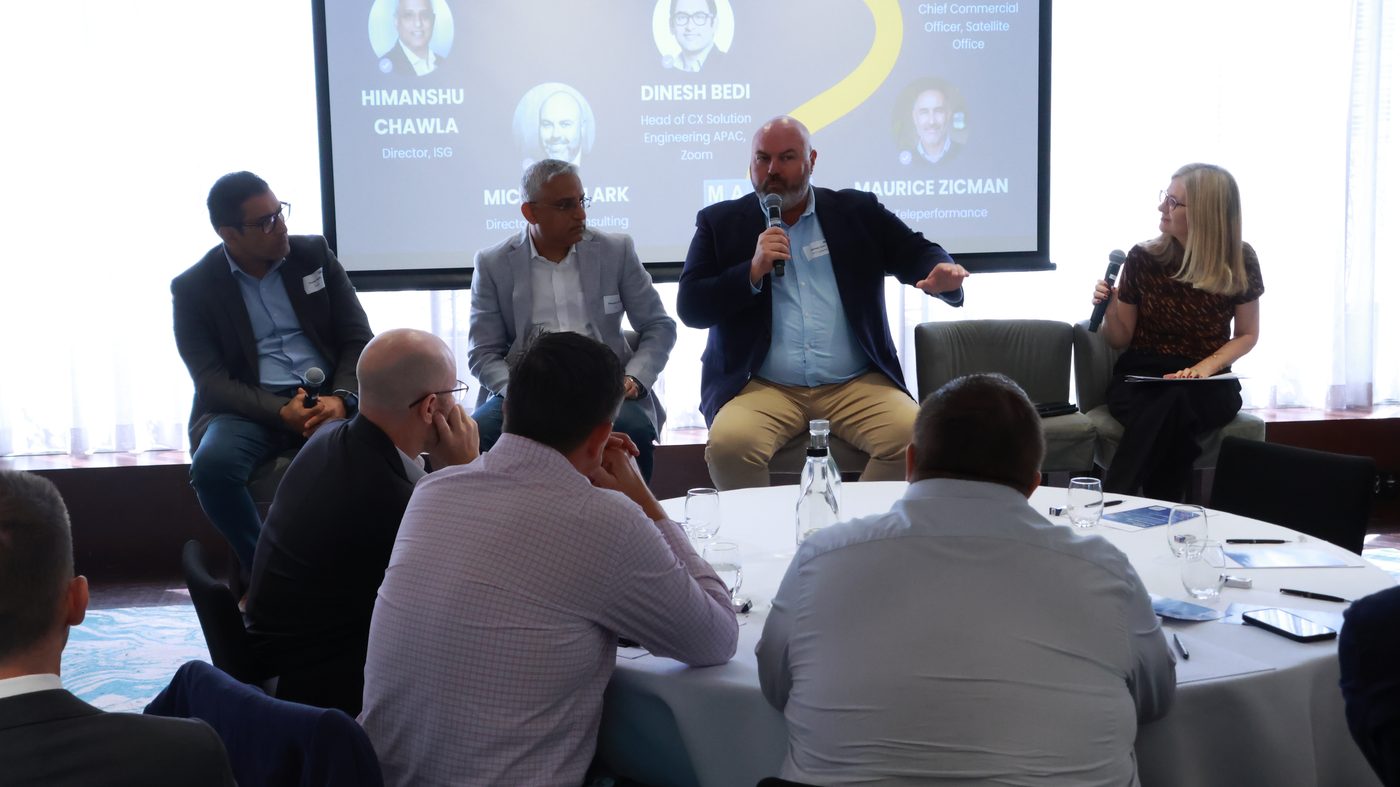
Keynotes, executive roundtables, board sessions and internal workshops. Enterprise service, AI and technology through an operating model lens, not a vendor one.
The Work
Speaking and facilitation engagements are built for organisations that need to shift how a room thinks before they can shift direction. A board that needs a credible, independent read on AI investment risk. An executive team that needs alignment before committing to a platform decision. A conference audience that needs someone who will say what the vendors in the room won't.
Michael Clark brings more than two decades of operational experience across service operations, contact centres and technology leadership, including senior government and Defence roles and five years as CIO. The point of view is grounded, vendor-agnostic and direct.
Engagements range from 45-minute keynotes to multi-session workshop series. All are built for senior audiences around the specific context, not repurposed slide decks.
Conference and industry event keynotes on CX, contact centres, AI, and technology transformation. Direct, opinionated, operationally grounded.
02
Executive Roundtable
Facilitated peer discussion for senior CX and technology leaders. Designed to surface shared challenges, stress-test assumptions, and reach practical conclusions.
03
Board Session
Structured briefing or facilitated discussion for boards on CX technology risk, AI investment, and contact centre performance. Plain language. Independent perspective.
04
Internal Workshop
Working sessions for leadership teams. Diagnostic framing, future state thinking, or alignment on a specific decision. Built around the organisation's actual context.
05
Panel Contribution
Available for conference panels, industry forums, and media commentary on CX, contact centres, AI strategy, and technology procurement.
Topics
What Gets Covered
AI and the Enterprise Service Model
Separating vendor claims from operational reality. AI does not fix a broken service model. It scales whatever the model already does, for better or worse.
Human and Machine by Design
Why the human and AI balance in service operations is a design decision, not a deployment one, and what good design looks like.
Service as an Enterprise Capability
Why organisations do not have customer experience problems, they have enterprise service problems, and what the operating model that fixes it looks like.
Technology Decisions That Do Not Age Well
The patterns behind service technology investments that underdeliver, and how to make decisions that hold up under scrutiny.
When Transformation Stalls
The structural reasons transformation programs lose momentum, and what leaders need to do differently to restore delivery confidence.
The Gap Between Reported and Real
Why service metrics often obscure more than they reveal, and how to build reporting that gives leadership genuine line of sight.
CXTT Consulting is a vendor-agnostic, independent enterprise service advisory firm based in Sydney, operating across APAC.
Why CXTT Exists
A principal-led model, built deliberately, not by accident.
Most service problems get diagnosed at the wrong altitude. A contact centre review fixes what it can see in the contact centre. CXTT diagnoses the enterprise problem behind it, independent of any platform or implementation revenue.
CXTT is a principal-led independent advisory practice. Senior advisory expertise stays directly involved in every engagement. Michael Clark, not a delegated team, leads the diagnosis and owns the conclusions.
CXTT doesn't maintain a full consulting pyramid to keep every capability permanently on payroll. Where an engagement needs specialist evidence, benchmarking, research or additional capability, CXTT brings the right specialist firm into that engagement through the CXTT Network. CXTT remains accountable for its own advice regardless of who else is in the room.
That's not CXTT pretending to be bigger than it is. It's a deliberately different model: senior judgement plus the ability to assemble deeper capability around the problem, without the overhead, or the incentives, of a conventional consulting pyramid.
What to Expect
How CXTT works, and how it scales
01
A Named Principal Leads
Michael Clark leads your engagement directly. Not a delegated team, not a rotating account manager.
02
Findings Stay Independent
No technology vendor relationships, no implementation revenue. Specialist network partners don't change that.
03
Specialist Capability, On Demand
Evidence, benchmarking or research capability is brought in through the CXTT Network when the problem needs it, not by default.
04
A Decision Brief, Not a Deck
SSHI and CXTT's other diagnostic methods exist so findings are repeatable and defensible, not a one-off opinion.
Michael Clark, Principal
Two Decades. No Agenda.
Michael Clark is a CX, contact centre, and technology adviser with more than 25 years of operational leadership experience. That background spans senior government CX roles, five years as a CIO accountable for complex technology portfolios, and an extensive advisory track record across government, Defence, financial services, utilities, retail, BPO, and large enterprise.
He works independently and vendor-agnostic. No platforms to sell. No implementation revenue to protect. The role is to help senior leaders and boards regain line of sight, make confident decisions, and build operating models that hold up under scrutiny.
Michael is also a Rugby Board Member, and has been named in the CXM Stars Top 150 (2026) and Top 100 APAC Contact Centre Influencers (2023 and 2024).
25+
Years in CX, contact centres and technology leadership
5
Years as CIO, complex technology portfolios
APAC
Government, Tech, BPO, Utilities and Mid to Large Enterprise
3x
Consecutive years of industry recognition 2023 to 2026
Indigenous-Owned & Supply Nation Registered
CXTT Consulting is proudly 50% Aboriginal-owned and registered with Supply Nation. We are a verified Indigenous business available under government and enterprise Indigenous procurement programs.
CXTT is principal-led. Where an engagement needs specialist evidence, capability or benchmarking, CXTT brings the right firm into that engagement. The client problem decides what's brought in, not the other way round.
No platforms to sell. No implementation revenue to protect. No referral arrangements. The same standard applies to every firm in the CXTT Network.
Independence, stated plainlyTechnology vendor commercial influence is not the same thing as a specialist capability partnership. CXTT has no technology vendor relationships and no implementation revenue to protect. That's what keeps the advice independent.
Where a CXTT Network partner participates in an engagement, that relationship does not determine CXTT's technology recommendations or strategic conclusions. Those stay with CXTT.
Benchmark
CXSnapshotz
Conversation Analytics
CX-EX
CXTT
Enterprise diagnosis, advisory and decision support
Economics & Benefits
WiserOwl
Research & Market Intelligence
CrayonIQ
Illustrative, not a client deliverable. The client problem determines which capability, if any, is brought into an engagement. Not every engagement uses the network, and no client gets all four firms by default.
CX-EX
What they do
CX-EX is an AI voice and conversational analytics company. Its platform, AutoInsights, listens to 100% of customer and agent calls, using generative AI, machine learning and phrase-spotting across more than 400 purpose-built AI models, rather than the small manual sample most contact centres rely on. It's built for regulated industries, including banking, insurance and government, and deploys in days rather than months.
CXTT diagnoses the operating model. CX-EX gives it a voice, turning every customer conversation into evidence rather than a sample.
How it complements our approach
Replaces manual call sampling with analysis of 100% of conversations, so findings reflect what's actually happening, not a guess from a handful of calls
Surfaces why customers are unhappy, why sales aren't closing, and where complaints and regulatory risk are concentrated
Identifies where frontline coaching will have the greatest impact
Gives CXTT diagnostic work an evidence base drawn from real interactions, not just interviews and documentation review
WiserOwl
What they do
Provide outcome and financial visibility across customer and service operations by connecting interaction data, operational activity and performance measures to cost, value and benefits realisation. WiserOwl helps organisations understand not just what is happening in customer interactions, but what it means in financial, risk and outcome terms.
CXTT finds why the work exists and what should change. WiserOwl shows what it costs and whether the benefit was realised.
How it complements our approach
Connects customer and agent interactions to cost, effort and value drivers
Surfaces where failure demand, rework and complexity are creating hidden cost
Provides evidence to support CX, workforce and AI investment decisions
Strengthens benefits realisation and post-implementation assurance
CrayonIQ
What they do
Provide decision-grade insight by helping leaders make sense of complex operational, workforce and CX data, translating it into clear, actionable narratives that support executive, board and investment decisions. CrayonIQ also contributes market and analyst research, including the APAC Buyers Guide, that strengthens the evidence base CXTT draws on.
CrayonIQ's research strengthens the evidence CXTT works from. It doesn't extend to, or influence, CXTT's independent advice to a specific client.
How it complements our approach
Translates fragmented CX, workforce and operational data into clear decision signals
Strengthens executive and board reporting through insight that clarifies trade-offs
Contributes APAC market and analyst research CXTT can draw on for context
Reduces the risk of decisions being driven by incomplete, noisy or misleading metrics
CXSnapshotz
What they do
Provide independent, market-relevant benchmarking across contact centres and service operations, helping organisations understand how their performance compares and where improvement effort will deliver the greatest return. Snapshotz focuses on contextual benchmarking, not league tables.
Enterprise service economics, AI governance, market intelligence and CXTT's own frameworks. Published here first, distributed through LinkedIn.
What Will Live Here
Categories
Market Analysis
APAC Buyers Guide material and market analysis of the CX and contact centre technology landscape.
CXTT Frameworks & Methods
CXTT's own diagnostic frameworks and methods, including SSHI, where they're ready for public presentation.
Enterprise Service Economics
Cost-to-serve, failure demand, and the economics behind service and technology decisions.
AI Governance & Assurance
How CXTT assesses AI vendor claims, and the governance questions boards and procurement teams should be asking.
Research & Collaboration
Research and analysis produced with CXTT Network partners, clearly attributed.
Long-Form Articles
Enterprise service thinking and commentary, written for senior leaders, not search engines.
Latest
First articles in development.
AI & Technology
How CXTT assesses AI vendor claims
The framework CXTT uses to separate what an AI vendor claims from what a government or enterprise buyer can actually verify.
Coming Soon
Enterprise Service Economics
Cost-to-serve, explained for boards
Why failure demand and cost-to-serve are board-level questions, not just contact centre metrics.
Coming Soon
Market Intelligence
Reading the APAC CX technology market
What CXTT tracks across the APAC CX and contact centre technology market, and why it matters before you shortlist.
Coming Soon
This page is being built out as a genuine repository of CXTT's thinking, not a placeholder. Selected downloadable reports, partner research and long-form articles will publish here first. In the meantime, recent commentary is available on Substack.
Anonymised summaries of CXTT engagements. Where confidentiality limits detail, that's stated rather than filled with marketing language.
Federal Government, Financial Intelligence
Contact Centre Strategy
Situation
A federal financial intelligence agency needed a contact centre strategy to move from a reactive service model to a proactive one.
Why It Was Difficult
The existing model wasn't built to escalate genuinely complex enquiries or route them to the right specialist quickly, and stakeholders across the agency held different views on what “good” looked like.
What CXTT Examined
A current-state assessment covering stakeholder interviews, process mapping and technology analysis.
What The Evidence Showed
Findings remain confidential to the client. The recommended shift to a knowledge-advisor model reflects what the assessment surfaced.
What CXTT Recommended
A transition to a knowledge-advisor service model built on omnichannel technology, intelligent triage and outcome-focused KPIs, with journey maps, personas, IVR design, SOPs and workforce management design.
What Happened
A phased implementation roadmap was delivered. The engagement is ongoing.
Federal Government, Defence
Future Service Delivery Model
Situation
A Defence security and estate function needed a future service delivery model across two distinct, large-scale service lines.
Why It Was Difficult
The two service lines had grown apart operationally, with fragmented governance that made a single future model hard to agree on.
What CXTT Examined
A three-phase review: discovery, co-design with frontline staff and leaders, and future model design.
What The Evidence Showed
Systemic fragmentation and governance gaps sitting behind the service lines' performance issues.
What CXTT Recommended
An endorsed future operating model, a service governance architecture, an implementation roadmap and a capability uplift framework.
What Happened
Recommendations were briefed to, and endorsed by, Deputy Secretary-level leadership.
Federal Government, Service Operations
Large-Scale Contact Centre Review
Situation
A federal department's largest branch, roughly 390 staff, needed an independent current-state assessment.
Why It Was Difficult
The scale, multiple sites, and the need to hear directly from frontline staff as well as leadership made this more than a desk review.
What CXTT Examined
30 structured interviews and workshops with over 110 people, examining people, process, technology and governance against an operating model framework.
What The Evidence Showed
Critical gaps in demand deflection and workforce planning.
What CXTT Recommended
A prioritised improvement roadmap with actionable recommendations.
What Happened
The roadmap was delivered, and a second engagement phase was subsequently scoped.
Enterprise, Global Technology
Global Telephony Review & ROI Model
Situation
A multinational enterprise software support company needed a global telephony and communications review.
Why It Was Difficult
Friction showed up differently across client, sales and engineering touchpoints, and stakeholders spanned multiple regions.
What CXTT Examined
A structured global discovery phase with senior stakeholders across regions.
What The Evidence Showed
Friction concentrated at specific points across the client, sales and engineering journey.
What CXTT Recommended
A unified, AI-enabled omnichannel front door, delivered across three phases: optimise, prove and unify.
What Happened
The financial model demonstrated a three-year ROI of 90.73%, accounting for productivity gains, re-contact reduction and customer lifetime value improvement.
Federal Government, Regulatory Tribunal
AI Voice Capabilities Assessment
Situation
A federal tribunal receiving around 5,000 calls a month needed to assess whether AI voice technology could replace its legacy IVR.
Why It Was Difficult
Government requirements, including IRAP certification and onshore data hosting, ruled out much of the general market, and the right answer had to map to the tribunal's existing technology environment.
What CXTT Examined
A five-day assessment applying CXTT's AI Adoption Framework, scanning the market and assessing five vendors in depth against government compliance requirements.
What The Evidence Showed
Vendor compliance and fit varied significantly once IRAP certification and data residency were applied as hard filters.
What CXTT Recommended
Three vendors shortlisted for Proof of Concept, with use cases mapped to the tribunal's existing environment.
What Happened
A vendor shortlist, use case mapping and adoption roadmap were delivered to replace the legacy IVR with 24/7 conversational AI.
Financial Services, Superannuation
Contact Centre Benchmarking Review
Situation
A superannuation master trust needed an independent view of its outsourced contact centre's performance.
Why It Was Difficult
The client needed external, sector-wide context on performance it couldn't generate from inside its own operation.
What CXTT Examined
Documentation review, interviews with key personnel and benchmarking against industry standards.
What The Evidence Showed
Gaps between current practice and sector norms across quality, efficiency and member experience metrics.
What CXTT Recommended
Prioritised findings with immediate quick wins and a structured improvement roadmap.
What Happened
Findings were delivered to senior leadership.
Member Services, Not-For-Profit
Member Engagement & Retention Program
Situation
A not-for-profit's member-facing team was facing engagement and retention risk.
Why It Was Difficult
The organisation had relied on a single direct-to-member model, which limited its options for reaching new members.
What CXTT Examined
A 12-month coaching and consulting program with the member-facing team.
What The Evidence Showed
The direct-to-member model was limiting reach and contributing to churn.
What CXTT Recommended
A strategic shift to a dual B2B and B2C growth approach.
What Happened
A 25% increase in member growth and a 5% improvement in member retention over 12 months.
AI Can Improve The Work. It Cannot Own The Judgement.
How CXTT uses AI in client engagements, and the boundaries that keep human accountability in charge of every recommendation.
AI is never the source of a CXTT recommendation.
Policy Position
Augmenting expertise. Not replacing it.
CXTT uses AI to augment consultant and adviser expertise. AI may support research synthesis, background analysis, drafting, structure, editing, Australian English normalisation, data visualisation and challenge testing. The named consultant remains accountable for the output.
Human Oversight
Required on every client deliverable.
Accountability
Named consultant or adviser signs off.
Transparency
AI use is explained where relevant.
Independence
Vendor-neutral, approved tooling only.
Security
CXTT's data classification framework applies.
Quality
AI outputs are independently validated.
Non-Negotiable Boundaries
Where AI stops
AI does not make client recommendations, replace professional judgement, determine vendor rankings, approve deliverables or override client governance. Confidential or restricted client information does not enter a public AI platform without explicit written client consent.
Client Inputs → Professional Analysis → AI Assistance → Human Validation → Client Deliverable
AI Assurance in Practice
Treat every AI output as draft material until a named human validates it.
Validate the work. Check factual claims against original source material, not an AI summary. Test logic against CXTT frameworks and the client context. The named consultant approves release and owns any error.
Protect client data. Material is classified Public, Internal, Confidential or Restricted. Confidential and Restricted data require the agreed secure handling approach. A client may exclude AI from an engagement entirely.
Stay independent. Tool choice does not signal vendor preference. No AI vendor may influence a client recommendation, assessment or strategic conclusion. If a conflict emerges, it's declared and the tool is stepped away from.
CXTT Responsible AI Policy. Effective 1 January 2026. Last updated 2 July 2026.
CXTT Consulting
Assessing an AI vendor or use case? Get an independent read.